
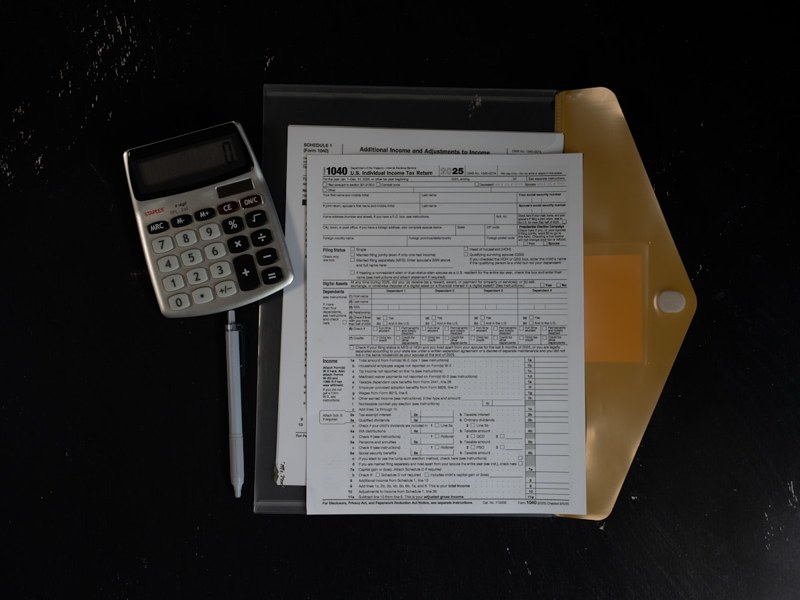
When a Singapore company makes a tax loss, two relief options sit alongside each other. The familiar one is loss carry-forward — the company keeps the loss on its books and offsets it against future profits, subject to the shareholders’ continuity test under section 37 of the Income Tax Act 1947. The less familiar one, and the focus of this guide, is loss carry-back under section 37E. Section 37E lets a company offset up to S$100,000 of current-year unabsorbed losses and capital allowances against the immediately preceding Year of Assessment, generating a tax refund instead of waiting to absorb the loss against future income.
Raffles Corporate Services works with a panel of experienced Singapore law firms who offer cost-effective and efficient legal service and advice. This article is general information only and is not legal advice.
For a company that paid tax in YA 2024 and made a loss in YA 2025, the difference between using section 37E and not using it can be a tax refund cheque worth up to S$17,000.
What section 37E does
Section 37E was introduced in 2006 and made permanent in 2009. It allows a company to carry back unabsorbed capital allowances and trade losses (the “qualifying deductions”) for one Year of Assessment, capped at S$100,000 per loss-year. The carried-back amount is set against the assessable income of the immediately preceding YA, generating a refund (or reduction in payable tax) for that prior year.
The S$100,000 cap was substantially increased from the original S$200,000 announced in Budget 2020 as a Covid-era measure, then reverted, and the permanent ceiling remains S$100,000 in 2026.
Who qualifies
To claim section 37E, the company must satisfy all of the following:
Same business test. The company must be carrying on the same trade or business in both YAs. A company that changed its primary business activity between the prior year (the carry-back target) and the loss year typically cannot use 37E.
Shareholders’ continuity test. At least 50% of the ultimate beneficial ownership of the company on the last day of the carry-back YA must be the same as on the first day of the loss YA. The same test that applies under section 37 for carry-forward applies in reverse here.
Singapore tax resident. The company must be a Singapore tax resident in both relevant YAs. A change in tax residency (centre of management and control moving offshore) breaks the chain.
Not in qualifying liquidation. Companies in the process of compulsory winding up under IRDA are excluded.
Single-shareholder private companies, family office vehicles, holding companies, regional headquarters and operating SMEs all routinely qualify. The eligibility tests are not particularly onerous compared with carry-forward.
What “unabsorbed” means
Unabsorbed trade losses are losses computed under Singapore tax rules (after capital allowances and after any group relief surrendered to other companies) that remain after applying current-year and group-relief offsets. Unabsorbed capital allowances are allowances computed under sections 19, 19A or 19B that the loss-year profit could not absorb.
The company first applies current-year capital allowances and losses against current-year income. If there is still a net unabsorbed amount, that residual is the pool that can be carried back under 37E (up to S$100,000) or carried forward indefinitely under section 37.
For companies actively using section 19A capital allowances, the unabsorbed CA component is often larger than the unabsorbed trade loss component.
How the cap interacts with group relief
Section 37E sits alongside section 37C group relief, which lets one Singapore-resident company surrender current-year unabsorbed deductions to another group company. The interaction is sequenced:
(a) Current-year unabsorbed deductions are first available for group relief surrender (section 37C). (b) Any deductions not surrendered are then available for the loss-year company’s own carry-back (section 37E), up to the S$100,000 cap. (c) Whatever remains after (a) and (b) is carried forward under section 37.
For a group with one profitable company and one loss-making company, the calculation is usually: surrender as much as the profitable company can absorb under section 37C; then if the loss-maker still has unabsorbed deductions and itself paid tax in the prior year, carry back under 37E; then carry forward whatever is left.
How to claim — the practical steps
The claim is made in the company’s Form C or Form C-S for the loss YA. The relevant section of the tax return asks whether the company elects for loss carry-back and, if so, the amount.
The election is irrevocable for that YA. The company chooses how much (up to S$100,000) to carry back and how much to carry forward; it cannot retrospectively change the split once submitted.
IRAS processes the carry-back at the same time as the loss-year return is finalised. Where the carry-back leads to a refund of tax paid in the prior YA, the refund is automatic — IRAS does not require a separate refund application. Where the carry-back instead reduces an outstanding tax balance for the prior year, the offset is applied directly.
The supporting computation should clearly show: (1) the company’s unabsorbed losses and capital allowances for the loss YA after all current-year offsets, (2) the application of group relief if any, (3) the amount elected for carry-back capped at S$100,000, (4) the recomputed tax liability for the prior YA, and (5) the resulting refund or offset.
Worked example
ABC Pte Ltd had assessable income of S$400,000 in YA 2024 and paid corporate tax of S$56,025 (17% of S$329,150 chargeable income after the partial tax exemption). In YA 2025 it had a trade loss of S$120,000 and unabsorbed capital allowances of S$40,000 — a total unabsorbed amount of S$160,000.
ABC elects to carry back S$100,000 under section 37E. The remaining S$60,000 is carried forward to YA 2026 and beyond. The carry-back reduces YA 2024 chargeable income from S$329,150 to S$229,150 (after re-applying the partial tax exemption). The tax on the reduced YA 2024 chargeable income is approximately S$38,956. Refund due to ABC: S$56,025 − S$38,956 = approximately S$17,069.
That S$17,069 is real cash in the bank, materially better than waiting to absorb the same S$100,000 against uncertain future profits.
When carry-back is the wrong choice
Section 37E is not always the right answer. If the company expects YA 2026 chargeable income to be sharply higher (so the tax saving from carry-forward will be at the full 17% rate after exhausting the partial exemption), and the prior YA only used the partial exemption thresholds (where the effective rate is lower), the time-value benefit of carry-back can be smaller than the rate-arbitrage benefit of carrying forward.
In practice, for most SMEs whose tax sits in the partial-exemption band, the time-value benefit (refund this year versus offset in two years) outweighs any rate-arbitrage consideration, so carry-back is usually the right answer.
The other case where carry-back is the wrong call is where the company is preparing for an acquisition or restructuring that will fail the shareholder continuity test under section 37 — in those cases the company may prefer to “use” the loss now via carry-back rather than risk losing it on a change of control.
Documentation IRAS will want to see on audit
(1) The detailed tax computation for the loss YA showing the unabsorbed amount and the carry-back election. (2) The recomputed tax computation for the prior YA. (3) Evidence the same business test is satisfied (board minutes, business activity descriptions, ACRA filings). (4) The Register of Substantial Shareholders and the Register of Members showing 50% continuity. (5) Evidence the company was Singapore tax resident in both YAs (board minutes of meetings held in Singapore, IRAS Certificate of Residence if available).
Keep these documents for at least 5 years from the end of the relevant YA, consistent with the records retention rules under section 199 Companies Act and IRAS standing practice.
How Raffles Corporate Services helps
We prepare corporate tax computations and Form C / Form C-S filings for SMEs, holding companies and family office vehicles. Where section 37E is in play we model the carry-back versus carry-forward outcome so the client can choose with full information. For more on the broader Singapore tax framework, see our 2026 corporate tax guide.
IRAS guidance on loss carry-back is at iras.gov.sg under Corporate Tax → Tax Reliefs and Deductions, and the consolidated Income Tax Act 1947 is at Singapore Statutes Online.
— The Editorial Team, Raffles Corporate Services
Need help with this?
Raffles Corporate Services can handle the ACRA filings, compliance documentation and records for you, and where court proceedings or legal advice are needed, we work with a panel of experienced Singapore law firms who offer cost-effective and efficient legal service and advice.
Email: [email protected]
Call, SMS or WhatsApp: +65 8501 7133