
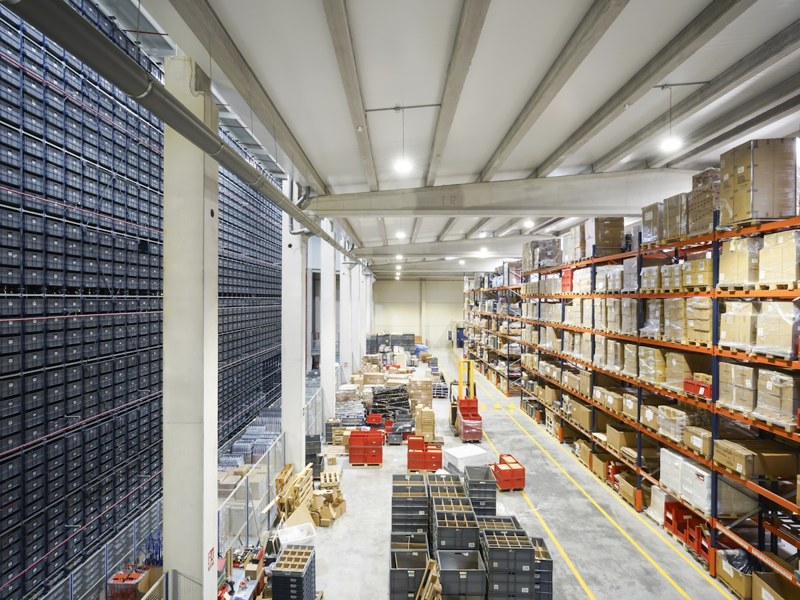
A free trade zone in Singapore is a designated area, established under the Free Trade Zones Act 1966, where imported goods can be stored, handled and re-exported without immediate payment of Goods and Services Tax or customs duty. For trading companies setting up Singapore operations in 2026, understanding free trade zone usage and the surrounding customs regime is the difference between trapping cash in import GST and moving goods through Singapore tax-efficiently.
Raffles Corporate Services works with a panel of corporate and employment law firms; this article is general information, not legal advice.
What a free trade zone is
Singapore operates several free trade zones at its sea and air gateways — including the major port terminals and Changi Airport’s cargo zones — declared under the Free Trade Zones Act 1966 and overseen by the appointed free trade zone authorities together with Singapore Customs. Within a free trade zone, goods are treated as not yet imported into Singapore’s customs territory. That means GST (currently 9%) and any customs duty are suspended while goods remain in the zone, becoming payable only when the goods are released into the local market.
For transhipment and re-export trade, goods can arrive, be consolidated, repacked or stored, and leave again without ever crossing into the taxable territory — so no GST or duty is triggered at all. This is what makes Singapore efficient as a regional distribution and entrepôt hub.
Who benefits from free trade zone usage
Free trade zone usage suits importers, exporters, distributors and traders who move goods through Singapore for re-export, consolidation or regional distribution. It pairs naturally with the trading incentives — companies pursuing the Global Trader Programme or running regional distribution from Singapore use free trade zones to avoid tying up cash in import GST. New entrants should first establish the underlying company; our Singapore incorporation for foreigners guide walks through the entity, resident director and bank account, and our free trade zone overview explains how the zones sit within the wider customs map.
How GST and customs duty actually work
Most goods entering Singapore attract no customs duty — duty is levied only on four categories: intoxicating liquors, tobacco products, motor vehicles and petroleum products. GST, however, applies broadly on imports. Key numbers for 2026:
- GST rate on imports: 9%.
- Customs duty: nil for most goods; dutiable only for liquor, tobacco, motor vehicles and petroleum.
- GST registration threshold: S$1 million in taxable turnover over a 12-month period, under the Goods and Services Tax Act 1993.
Within a free trade zone these charges are suspended. When goods are removed into customs territory, the importer pays GST (and duty if applicable) at that point, unless a relief scheme applies. Companies that import to re-export can also use schemes administered by Singapore Customs — such as the Major Exporter Scheme, zero-GST warehouses and licensed warehouses — to defer or suspend GST outside the physical zone.
Cost, accounts and timeline
There is no separate “free trade zone licence” for an ordinary trader using the zones for transhipment; the cost is in the logistics and the customs registrations. To import or export at all, a company must activate a customs account with Singapore Customs, which is free and usually approved within one to two working days. Storage in zone facilities is commercial and priced by the operator. The underlying company costs are the familiar ones: ACRA incorporation fees of S$315, registration within one to three working days, and first-year corporate secretarial support of around S$1,500–S$3,500.
If your turnover will exceed S$1 million you must register for GST; many traders also voluntarily register to recover input GST. Confirm the current schemes and thresholds with Singapore Customs and IRAS.
Step-by-step: moving goods through a free trade zone
First, incorporate the Singapore company and open its bank account. Second, activate the customs account and decide whether you need GST registration or a suspension scheme. Third, appoint a freight forwarder or zone operator and obtain the necessary permits through Singapore Customs’ TradeNet system for each movement. Fourth, route inbound goods into the free trade zone, where GST and duty are suspended. Fifth, either re-export directly from the zone (no GST or duty) or clear the goods into customs territory and account for GST at that point. Throughout, keep import, export and inventory records, which Singapore Customs can audit.
Common mistakes and gotchas
A frequent mistake is assuming “free trade zone” means a special tax-free company status — it does not; it is a physical customs treatment of goods, not a corporate tax incentive. Another is paying import GST unnecessarily on goods that were always destined for re-export, instead of keeping them in the zone or using a suspension scheme. A third is sloppy permit declarations in TradeNet, which can trigger penalties under the customs framework. Finally, traders sometimes overlook the GST registration threshold and the input-tax recovery benefit of voluntary registration. Staff relocating to manage the trade desk will need work passes — see our Employment Pass guide.
Related guides
Read this alongside our free trade zone overview and the incorporation-for-foreigners guide. Trading companies should also review the concessionary-tax angle, since free trade zone logistics and the Global Trader Programme are usually planned together.
Free trade zone versus warehouse schemes
The free trade zone is one of several tools for managing import GST and duty, and they are often confused. A free trade zone is a physical gateway area where goods are treated as not yet imported. A zero-GST warehouse is a licensed non-FTZ facility where non-dutiable overseas goods can be stored with GST suspended. A licensed warehouse is for dutiable goods (liquor, tobacco, petroleum, motor vehicles) with duty and GST suspended. The Major Exporter Scheme, by contrast, is not a place at all — it lets approved businesses import without paying GST upfront, easing cash flow for high-volume exporters. Choosing the right combination depends on whether goods are dutiable, whether they are re-exported, and how long they are stored.
A worked transhipment example
A distributor consolidates electronics from three Asian factories at a Singapore free trade zone, repacks them into market-specific shipments, and re-exports to Australia, India and the Gulf. Because the goods never enter customs territory, no import GST and no duty are triggered at any point — the only Singapore costs are storage, handling and the freight forwarder’s fees. Had the same goods been cleared into Singapore and then re-exported, the distributor would have paid 9% import GST and then reclaimed or zero-rated it, tying up cash in the interim. The free trade zone removes that timing drag entirely.
TradeNet permits and documentation
Every movement of goods in or out of Singapore requires a permit declared through TradeNet, Singapore’s single trade-documentation window. Declarations must be accurate — correct tariff classification, value, quantity and party details. Under the Customs Act 1960, misdeclaration, under-declaration or failing to produce records can attract penalties regardless of whether any duty was payable. Companies typically appoint a freight forwarder or declaring agent to lodge permits, but the trader remains responsible for the accuracy of the underlying information.
Audits, records and penalties
Singapore Customs and IRAS can audit import, export and inventory records. Traders should retain permits, invoices, bills of lading, packing lists and proof of export for at least five years and be able to reconcile physical stock to declarations. Common enforcement triggers include stock discrepancies in a zero-GST warehouse, goods released from a free trade zone without a proper permit, and GST reclaimed on goods that were never genuinely imported for the business. Good inventory controls and a clean TradeNet history are the best protection.
Pairing free trade zones with trading incentives
Most serious traders plan logistics and tax together. A company pursuing the Global Trader Programme will route qualifying trades through Singapore for the concessionary income-tax rate while using free trade zones and suspension schemes to keep import GST off its balance sheet. The two work in tandem: one manages the tax on profit, the other manages the cash flow on goods.
GST registration and input-tax recovery for traders
Even where goods move through a free trade zone, a trading company with significant local activity often benefits from GST registration. Registration is compulsory once taxable turnover exceeds S$1 million over twelve months under the Goods and Services Tax Act 1993, but many traders register voluntarily to recover input GST on local costs. Exports are zero-rated, so an exporter that incurs local GST on services and overheads can recover it — turning GST from a cost into a neutral flow. The Major Exporter Scheme goes further, suspending import GST for approved high-volume exporters so cash is not tied up at the border.
Dutiable goods: the licensed-warehouse route
For the four dutiable categories — liquor, tobacco, motor vehicles and petroleum — the free trade zone and zero-GST warehouse are not the right tools. Dutiable goods are stored under a licensed warehouse arrangement, where both customs duty and GST are suspended until the goods leave for the local market. Traders dealing in these products should plan their storage and licensing specifically around the dutiable regime, since the penalties for mishandling duty-suspended goods are significant under the Customs Act 1960.
A first-shipment checklist
Before your first movement, confirm the company is incorporated and banked; activate the customs account; decide on GST registration or a suspension scheme; appoint a freight forwarder or declaring agent; classify your goods correctly for tariff purposes; and choose the right storage treatment — free trade zone, zero-GST warehouse, or licensed warehouse — for what you are moving. Getting the classification and treatment right before goods arrive avoids unnecessary GST and permit problems later.
FAQs
Does a free trade zone make my company tax-free?
No. A free trade zone is a customs treatment of goods, not a corporate tax status. It suspends import GST and customs duty while goods are in the zone; your company’s profits are still taxed under the Income Tax Act.
What GST rate applies on imports in 2026?
Import GST is 9%, suspended while goods remain in a free trade zone and payable when goods are released into customs territory, unless a suspension scheme such as the Major Exporter Scheme applies.
Which goods attract customs duty in Singapore?
Only four categories: intoxicating liquors, tobacco products, motor vehicles and petroleum products. All other goods are duty-free, though GST still applies on import.
Do I need a special licence to use a free trade zone?
Ordinary traders do not need a separate free trade zone licence; you need an activated customs account and the relevant TradeNet permits. Storage is arranged commercially with a zone operator.
When must I register for GST?
Registration is compulsory once taxable turnover exceeds S$1 million over a 12-month period under the Goods and Services Tax Act 1993. Many traders also register voluntarily to recover input GST.
Need help with this? Call, SMS or WhatsApp +65 8501 7133, or email [email protected]. Raffles Corporate Services works with a panel of corporate and employment law firms; this article is general information, not legal advice.